
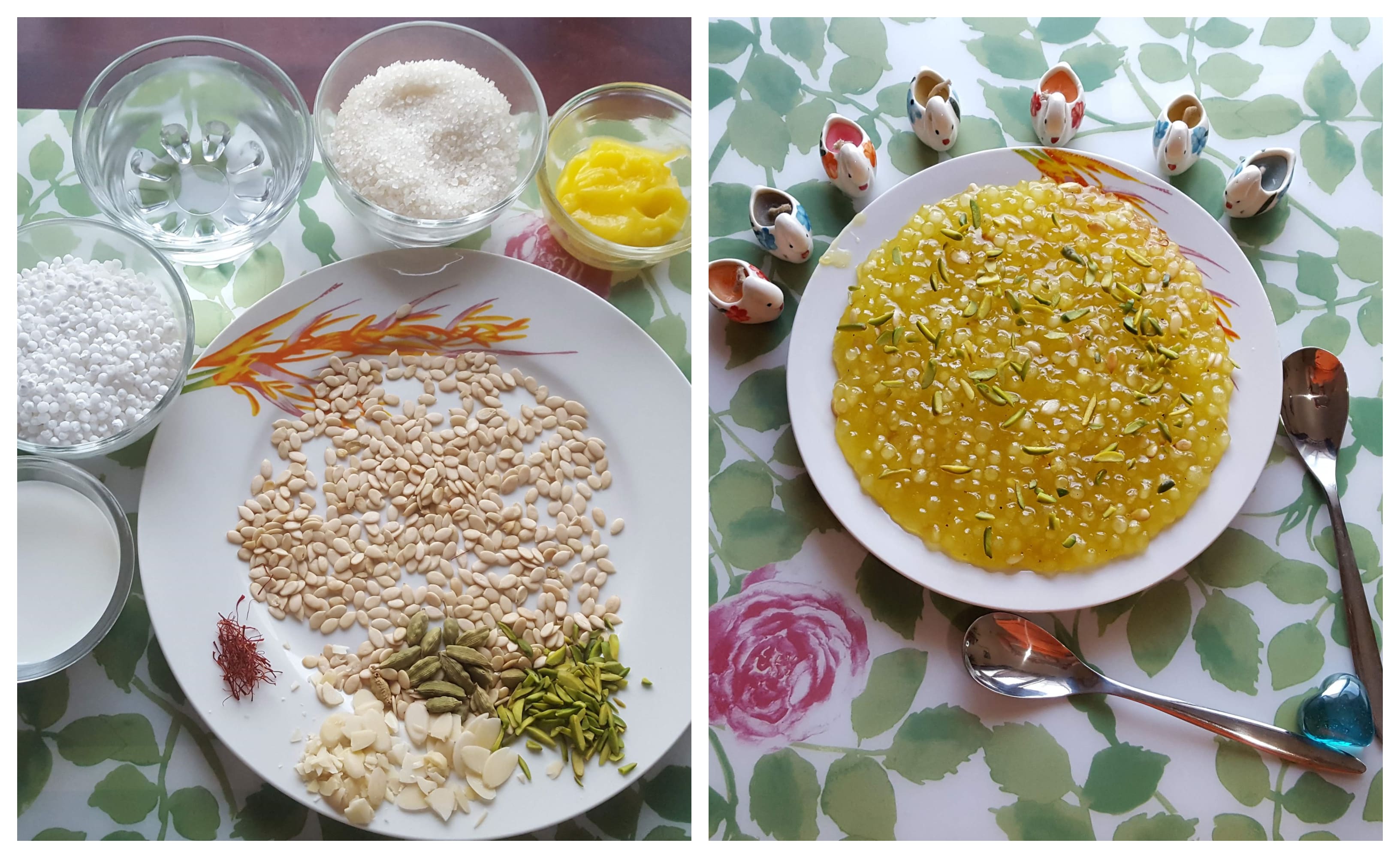
Sabudana Halwa Recipe is a delicious Indian sweet made with sabudana (sago), ghee, milk, sugar, saffron, and dry fruits. This traditional halwa is especially prepared during Navratri, Maha Shivratri, Ekadashi, and other fasting occasions. Moreover, its soft texture, rich flavour, and aromatic spices make it a wonderful festive dessert.
Sabudana is a popular ingredient used in Indian fasting recipes. Furthermore, it is used to prepare many traditional dishes such as Sabudana Khichdi, Sabudana Vada, Sabudana Thalipeeth, Sabudana Kheer, and Sabudana Halwa. This easy halwa recipe transforms simple sabudana pearls into a rich and satisfying sweet treat.
Whether you are preparing it for vrat, festive celebrations, or simply craving a homemade Indian dessert, this Sabudana Halwa Recipe is easy to make and loved by everyone.
Why You Will Love This Sabudana Halwa Recipe
- First, it is a perfect fasting dessert.
- Moreover, it requires simple ingredients.
- In addition, saffron and cardamom give it a beautiful aroma.
- Furthermore, roasted dry fruits add a delicious crunch.
- Finally, it is easy to prepare and perfect for festive occasions.
Ingredients for Sabudana Halwa Recipe
Serves: 4
- 1 cup sabudana (sago)
- 3–4 tablespoons ghee
- ½ cup milk
- 1½ cups water
- Sugar, according to taste
- ½ teaspoon green cardamom powder
- 5–6 cashews, fried or roasted
- 6–7 almonds, finely chopped
- 1–2 teaspoons raisins
- 7–8 saffron strands, soaked in warm milk
- 1–2 drops yellow food colour (optional)
- ¼ teaspoon turmeric powder (optional)
How to Make Sabudana Halwa Recipe
Step 1: Soak the Sabudana
First, rinse the sabudana properly and soak it with ½ cup water for 1–2 hours.
After soaking, the sabudana pearls should become soft and slightly swollen.
Step 2: Cook the Sabudana
Next, heat 1–2 teaspoons of ghee in a pressure cooker.
Add the soaked sabudana and roast it gently for 3–4 minutes.
After that, add milk and water. Cook on medium flame for 4–5 minutes or until it cooks completely (approximately 2 whistles).
Step 3: Prepare the Halwa
Transfer the cooked sabudana mixture into a heavy-bottomed pan or kadai.
Now, add sugar and optional yellow colour or turmeric powder.
Stir continuously on low heat until the sugar dissolves completely.
Step 4: Add Flavours and Finish
Next, add the remaining ghee and continue cooking on low flame.
Keep stirring until the ghee starts separating from the sides of the pan. This step gives the halwa a rich texture.
Then, add soaked saffron, cardamom powder, raisins, cashews, and almonds.
Mix everything well and turn off the flame.
Your delicious Sabudana Halwa Recipe is ready to serve.
Serving Suggestions
- Serve warm as a fasting dessert.
- Garnish with extra chopped nuts and saffron strands.
- Enjoy after vrat meals.
- Serve during Navratri, Shivratri, or festive celebrations.
Tips for Making Perfect Sabudana Halwa
- Soak sabudana properly for a smooth texture.
- Moreover, roast the sabudana gently to enhance its flavour.
- Cook the halwa on low heat for the best consistency.
- Stir continuously after adding sugar to prevent sticking.
- Add ghee gradually for a rich and glossy texture.
Frequently Asked Questions
Can I make Sabudana Halwa without milk?
Yes, you can replace milk with water or coconut milk according to your preference.
Why is my Sabudana Halwa sticky?
Sabudana naturally has starch, so the halwa can become sticky if overcooked. Cooking on low heat and stirring properly helps achieve the right texture.
Can I store Sabudana Halwa?
Yes, store it in an airtight container in the refrigerator for up to 2–3 days. Reheat gently before serving.
Can I make this recipe vegan?
Yes, replace ghee with coconut oil and milk with coconut milk for a vegan version.
Why This Sabudana Halwa Recipe Is Worth Trying
This Sabudana Halwa Recipe is a beautiful combination of tradition and flavour. Moreover, the richness of ghee, fragrance of saffron, and crunch of dry fruits make it a special festive sweet. Therefore, this easy vrat dessert is a must-try recipe for Navratri, Shivratri, and all special occasions.