
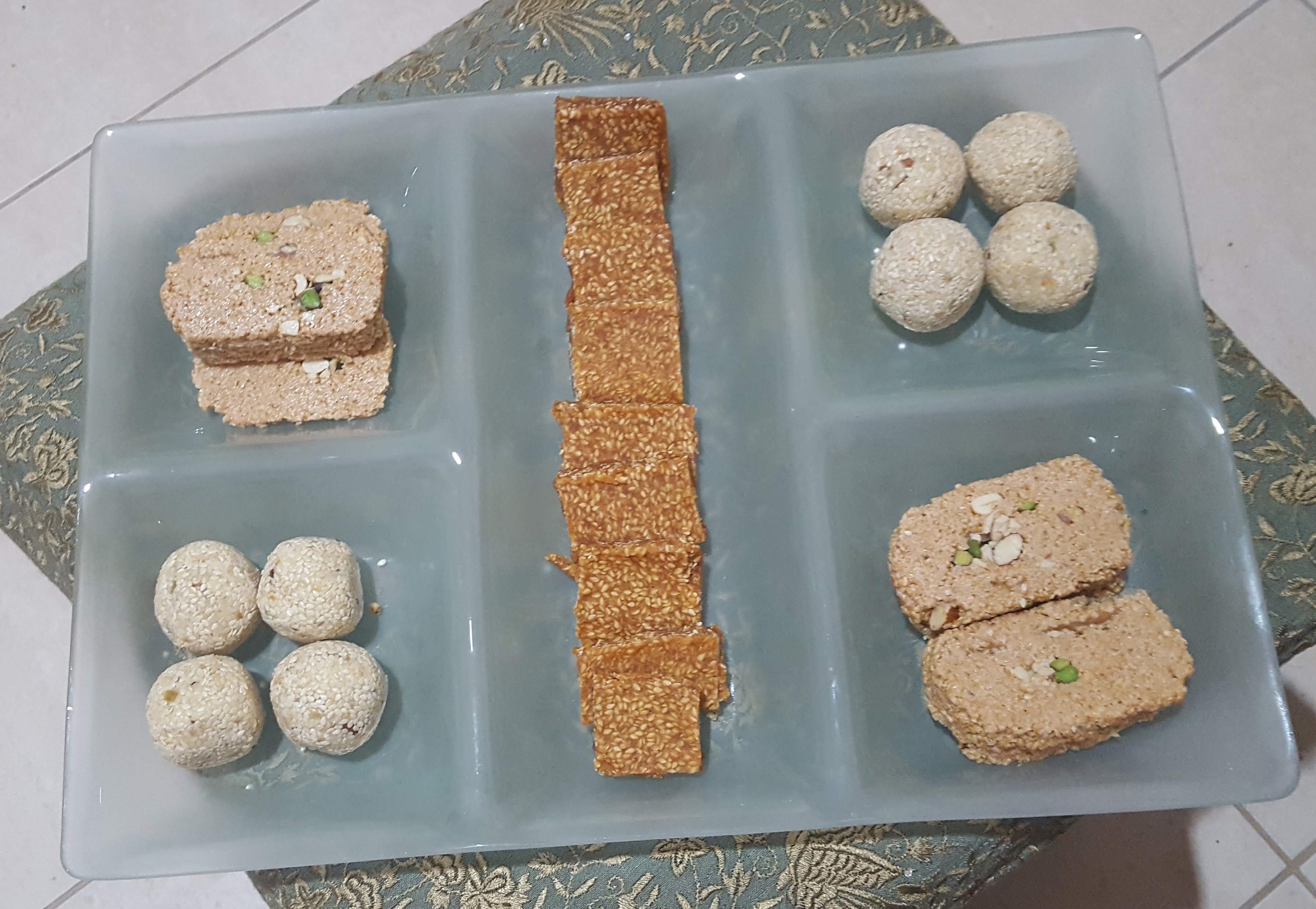
Til Ke Ladoo Recipe is a traditional Indian winter sweet made with roasted white sesame seeds, soft mawa (khoya), dry fruits, bura sugar, and ghee. These ladoos are especially prepared during Makar Sankranti and Lohri celebrations. The combination of nutty sesame seeds, creamy mawa, and crunchy dry fruits creates a delicious melt-in-the-mouth festive treat.
During the winter season, sesame-based sweets are an important part of Indian festivals and harvest celebrations. Moreover, Til Ke Ladoo, Til Chikki, and other sesame sweets are enjoyed by families across India.
Unlike jaggery-based til ladoos, this version is prepared with mawa and bura sugar, which gives the ladoos a rich flavour, soft texture, and beautiful festive taste. These homemade til ladoos are perfect for serving guests, gifting, or enjoying with your family during the festive season.
Why You Will Love This Til Ke Ladoo Recipe
- First, it is a traditional Makar Sankranti sweet.
- Moreover, it has a rich and soft texture because of mawa.
- In addition, roasted sesame seeds add a wonderful nutty flavour.
- Furthermore, dry fruits make these ladoos extra delicious.
- Finally, this recipe is simple and perfect for festive celebrations.
Ingredients for Til Ke Ladoo Recipe
Makes: 12–15 ladoos
- 1½ cups white sesame seeds (unpolished til)
- 250 g grated mawa (khoya)
- 200 g bura sugar (boora), or according to taste
- 8–10 almonds, finely chopped
- 10–12 roasted cashews, finely chopped
- 2–3 tablespoons ghee, or as required
How to Make Til Ke Ladoo Recipe
Step 1: Roast the Sesame Seeds
First, heat a heavy-bottomed kadai on low to medium flame.
Add sesame seeds and roast them for 2–3 minutes while stirring continuously.
When the sesame seeds start popping and release a pleasant aroma, they are ready.
Transfer the roasted sesame seeds to a plate and allow them to cool completely.
Step 2: Prepare the Sesame Mixture
Once the sesame seeds are completely cool, transfer them to a grinder jar.
Pulse for a few seconds until they become slightly coarse.
Do not grind them into a fine powder because the coarse texture gives the ladoos a better taste.
Step 3: Roast the Mawa
Next, heat the same kadai on low flame.
Add grated mawa and roast it gently for 2–3 minutes while stirring continuously.
Once the mawa becomes soft and aromatic, turn off the flame.
Allow it to cool slightly.
Step 4: Mix the Ladoo Ingredients
Now add roasted sesame seeds, bura sugar, chopped almonds, and roasted cashews to the mawa.
Mix everything well until all ingredients combine properly.
If the mixture feels dry, add a little ghee and mix again.
Step 5: Shape the Til Ladoo
Take a small portion of the mixture in your palm.
Press gently and roll it into a smooth round ladoo.
Repeat the process with the remaining mixture.
Your delicious Til Ke Ladoo Recipe with Mawa and Dry Fruits is ready.
Serving Suggestions
Serve these homemade til ladoos during:
- Makar Sankranti
- Lohri celebrations
- Winter festivals
- Family gatherings
They are also perfect for festive gifting.
Tips for Making Perfect Til Ke Ladoo
- Roast sesame seeds on low heat to prevent burning.
- Allow sesame seeds to cool before grinding.
- Keep the sesame texture slightly coarse for better flavour.
- Roast mawa carefully on low heat.
- Add bura sugar only after the mawa cools slightly to maintain the right texture.
- Add ghee only if required for binding.
Frequently Asked Questions
Can I make Til Ke Ladoo without jaggery?
Yes. This recipe uses mawa and bura sugar instead of jaggery, which gives a rich and soft texture.
How long can I store homemade Til Ke Ladoo?
Store these ladoos in an airtight container in the refrigerator. They stay fresh for around 1–2 weeks.
Can I use black sesame seeds for this recipe?
Yes, you can use black sesame seeds. However, white sesame seeds give a mild flavour and traditional appearance.
Why This Til Ke Ladoo Recipe Is Special
This Til Ke Ladoo Recipe with Mawa and Dry Fruits is a beautiful combination of tradition and rich flavours. The roasted sesame seeds, creamy mawa, and crunchy nuts make every bite delicious. Therefore, this festive sweet is a wonderful addition to Makar Sankranti celebrations and winter gatherings.