
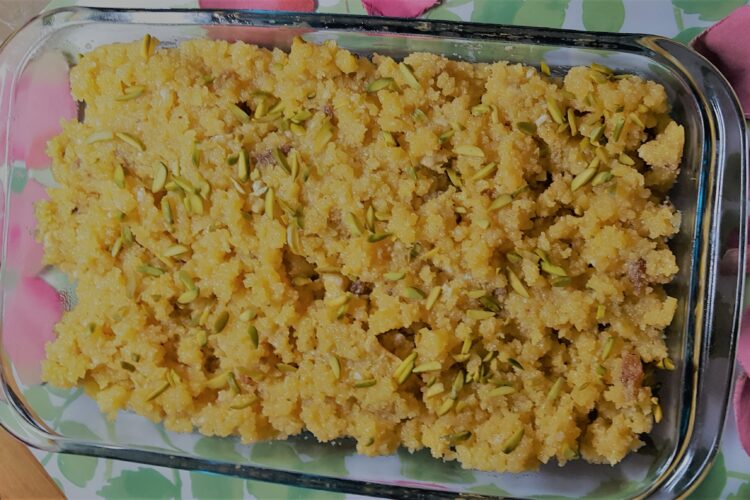
Moong Dal Halwa is a rich and delicious traditional Indian dessert, especially popular in Rajasthan and North India. Made with split yellow moong dal, ghee, milk, sugar, saffron, cardamom, and nuts, this halwa has a wonderful grainy texture and irresistible aroma.
This traditional Moong Dal Halwa Recipe is especially loved during the winter months and is often prepared for weddings, festivals, family celebrations, and other special occasions. Although it takes a little patience to cook, the rich flavor and soft texture make the effort worthwhile.
In my home, warm moong dal halwa is a comforting winter dessert. The aroma of roasted moong dal and ghee fills the kitchen, while saffron and cardamom add a beautiful festive touch.
Why You’ll Love This Moong Dal Halwa Recipe
There are many reasons to try this traditional dessert:
- Rich and flavorful Indian dessert
- Perfect for winter
- Made with simple ingredients
- Naturally aromatic with saffron and cardamom
- Delicious for festivals and celebrations
- Wonderful served warm with chopped nuts
Most importantly, slow-cooking the moong dal with ghee gives this halwa its traditional taste and texture.
Ingredients for Moong Dal Halwa
- 1 cup split yellow moong dal, soaked for 4–5 hours
- 1 cup pure ghee
- 1 cup milk
- 1 cup water
- 1 cup sugar
- 8–10 saffron strands, soaked in warm milk
- ¼ teaspoon cardamom powder
- 8–10 almonds, finely chopped
- 1–2 tablespoons pistachios, finely chopped
- 8–10 cashews, cut into small pieces
How to Make Moong Dal Halwa
Step 1: Soak the Moong Dal
First, rinse the split yellow moong dal thoroughly.
Soak it in enough water for 4–5 hours.
After soaking, drain the dal very well. The less water remaining, the easier it will be to achieve the right texture.
Step 2: Make a Coarse Moong Dal Paste
Transfer the drained moong dal to a mixer grinder.
Blend it into a coarse paste without adding water. Do not make the paste completely smooth because the slightly grainy texture is an important characteristic of traditional Moong Dal Halwa.
Next, transfer the paste to a muslin cloth.
Press the cloth gently to remove excess moisture. You can also hang the wrapped dal for about 5–7 minutes to drain further.
After that, transfer the moong dal paste to a bowl and separate it gently with a spoon.
Step 3: Roast the Moong Dal in Ghee
Heat the ghee in a deep, heavy-bottomed pan or non-stick pan over medium heat.
Add the prepared moong dal paste.
Now comes the most important step: roasting the dal patiently.
Cook it over medium heat for about 15–20 minutes, stirring regularly so that it does not stick to the bottom.
As the dal cooks, it will gradually change color and develop a delicious roasted aroma.
Do not rush this step. Proper roasting gives the Moong Dal Halwa Recipe its rich flavor.
Step 4: Prepare the Milk Mixture
Meanwhile, add the milk, water, and sugar to another pan.
Mix well and bring the mixture to a gentle simmer.
Cook for about 4–5 minutes.
Keep the mixture warm while the moong dal continues cooking.
Step 5: Combine the Milk and Roasted Dal
Once the moong dal is nicely roasted, slowly add the warm milk mixture.
Be careful while adding it because the mixture may bubble.
Stir continuously until the milk is absorbed into the roasted dal.
Then, reduce the heat to low and continue cooking for another 5–7 minutes.
The halwa will gradually become thick and rich.
Step 6: Add Saffron, Cardamom, and Nuts
Next, add the saffron soaked in warm milk and cardamom powder.
Add the chopped almonds, pistachios, and cashews as well.
Mix everything thoroughly and cook for another minute or two.
Once the halwa reaches a rich, soft, and slightly grainy consistency, turn off the heat.
How to Serve Moong Dal Halwa
Serve this Moong Dal Halwa warm in serving bowls.
Garnish with extra chopped almonds, pistachios, and cashews.
For a festive presentation, you can also add a few saffron strands on top.
The halwa tastes especially comforting during winter when served warm.
Tips for the Best Moong Dal Halwa
Use a Coarse Paste
Avoid blending the soaked dal into a smooth paste. A coarse texture gives the halwa its traditional grainy consistency.
Drain the Dal Properly
Remove as much excess water as possible before grinding. This helps the dal roast properly in ghee.
Roast the Dal Patiently
The roasting stage is the key to flavorful halwa. Therefore, keep stirring and cook the dal until it develops a pleasant roasted aroma.
Use Good-Quality Ghee
Pure ghee gives this dessert its characteristic richness and aroma.
Keep Stirring
Moong dal can stick to the bottom of the pan while roasting. So, stir regularly, especially around the edges and bottom.
Frequently Asked Questions
Can I make Moong Dal Halwa ahead of time?
Yes. You can prepare the halwa ahead of time and refrigerate it in an airtight container. Reheat it gently before serving.
Why is my Moong Dal Halwa sticky?
The dal may not have been roasted enough, or too much liquid may have been added. Proper roasting is essential for achieving the traditional texture.
Can I use less ghee?
You can reduce the amount according to your preference. However, traditional moong dal halwa gets much of its rich flavor and texture from ghee.
Is Moong Dal Halwa served hot or cold?
It is traditionally enjoyed warm, especially during winter. However, you can also enjoy it at room temperature.
Final Thoughts
This traditional Moong Dal Halwa Recipe is a beautiful example of the rich dessert traditions of Rajasthan. The combination of roasted moong dal, ghee, milk, saffron, cardamom, and nuts creates a dessert that is rich, aromatic, and deeply comforting.
Although making moong dal halwa requires some patience, the wonderful aroma that fills your kitchen makes every minute worthwhile. So, whenever winter arrives or you have a special celebration, make a warm batch of this delicious halwa and share it with your family and friends.