
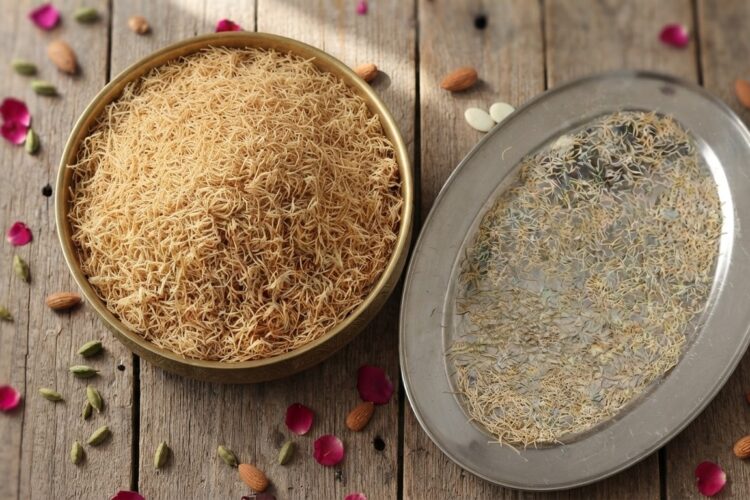
Homemade Jawe Recipe is a traditional Northern Indian recipe in which thin strands of dough are prepared, sun-dried, and roasted for later use. These homemade jawe, also known as homemade seviyan or vermicelli, are especially prepared in many families before festivals such as Raksha Bandhan.
Making jawe at home is more than just a cooking process. Moreover, it is a beautiful tradition that connects families with old-fashioned Indian cooking. Women traditionally prepare the strands together, dry them in the warm sunshine, and store them for festive recipes.
The dried jawe can later be cooked with milk and sugar to make a delicious sweet dish.For another traditional milk-based festive dessert, try our [Sheer Khurma Recipe]. Alternatively, they can be used in savoury preparations with spices and vegetables. As a result, this simple homemade vermicelli is both versatile and useful for festive cooking.
Why You Will Love This Homemade Jawe Recipe
- First, it preserves a traditional Northern Indian cooking method.
- Moreover, homemade jawe require only a few basic ingredients.
- In addition, you can prepare and store them for several months.
- Furthermore, they can be used in both sweet and savoury recipes.
- Finally, making jawe at home brings a nostalgic festive touch to your kitchen.
Ingredients for Homemade Jawe Recipe
- 2 cups all-purpose flour (maida) or whole wheat flour (atta)
- 1–2 tablespoons fine semolina (suji), optional
- Water, as required
Note: Traditional jawe dough does not require salt.
How to Make Homemade Jawe Recipe
Step 1: Prepare the Dough
Take the flour in a large mixing bowl. If you prefer, add a small amount of fine semolina for a slightly different texture.
Gradually add water and knead until you get a smooth and pliable dough. The dough should hold together easily without becoming too soft or sticky.
Unlike a very stiff pasta dough, traditional jawe dough should remain manageable. Cover the dough and let it rest for a short while.
Step 2: Shape the Jawe
After resting, divide the dough into small portions.
Traditionally, the dough is shaped into very thin strands by hand. You can also use a traditional seviyan or vermicelli press if available.
Work gently to create thin, even strands. Place the fresh jawe on a large clean steel tray or cotton cloth, keeping the strands separated.
Step 3: Sun-Dry the Homemade Jawe
Place the tray in direct sunlight and allow the jawe to dry completely.
Depending on the weather, drying may take several hours or longer. Turn the strands gently when needed so they dry evenly.
The jawe should become completely dry, crisp, and brittle before roasting or storing.
Step 4: Roast the Jawe
Once the jawe have dried completely, heat a heavy-bottomed pan or kadai over medium-low heat.
Add the dried jawe and roast them gently while stirring continuously. Gradually, they will develop a light golden-brown colour and a pleasant roasted aroma.
Be careful not to use high heat because thin jawe can burn quickly.
Remove them from the pan and allow them to cool completely.
Step 5: Store the Homemade Jawe
Once completely cool, transfer the roasted jawe to a clean, dry, airtight container.
Keep the container in a cool, dry place. Always use a clean, dry spoon when removing jawe from the container.
How to Use Homemade Jawe
Homemade jawe are wonderfully versatile. You can use them to prepare:
- Jawe ki kheer
- Sweet seviyan
- Festive milk seviyan
- Savoury vermicelli
- Spiced vegetable seviyan
- Festival breakfast dishes
For a sweet preparation, cook the roasted jawe with milk, sugar, cardamom, and dry fruits.
You can also try our [Makhane Ki Kheer Recipe] for another creamy Indian festive dessert.
For a savoury version, cook them with vegetables, cumin, and other aromatic spices.
Serving Suggestions
Serve sweet homemade jawe as a festive dessert during Raksha Bandhan, Diwali, or family celebrations.
For a savoury preparation, serve them warm with curd, pickle, or a simple vegetable side dish.
Tips for Making Perfect Homemade Jawe
- Use fresh, good-quality flour for the best texture.
- Keep the dough soft enough to shape but not sticky.
- Make the strands as thin and even as possible.
- Dry the jawe completely before roasting.
- Roast them over medium-low heat to prevent burning.
- Stir continuously while roasting for an even colour.
- Cool the jawe completely before storing.
- Always store them in a clean, dry, airtight container.
Frequently Asked Questions
What are homemade jawe?
Jawe are traditional homemade vermicelli strands prepared from a simple flour dough. The strands are dried, roasted, and stored for later use.
Are jawe the same as seviyan?
Jawe are a traditional form of homemade seviyan or vermicelli. However, the preparation and shape can vary between families and regions.
Can I make jawe with whole wheat flour?
Yes. Whole wheat flour can be used instead of maida. Some families also add a small amount of fine semolina for texture.
How long can homemade jawe be stored?
When completely dried, properly roasted, and stored in a clean airtight container, homemade jawe can stay good for several months.
Can I make jawe without sun-drying?
Traditional jawe are usually sun-dried because sunlight helps remove moisture naturally. However, in humid weather, you can use a food dehydrator or a very low-temperature oven if suitable.
Why This Homemade Jawe Recipe Is Special
This Homemade Jawe Recipe is a beautiful example of traditional Indian food preparation. More importantly, it carries memories of families coming together before festivals and preparing food with patience and care.
Today, ready-made vermicelli is easily available, but homemade jawe have a special texture and nostalgic charm. Therefore, making them at home is a wonderful way to preserve an old family tradition while creating delicious festive dishes for the next generation. If you enjoy traditional homemade sweets, you may also like our [Suji Ka Halwa Recipe].