
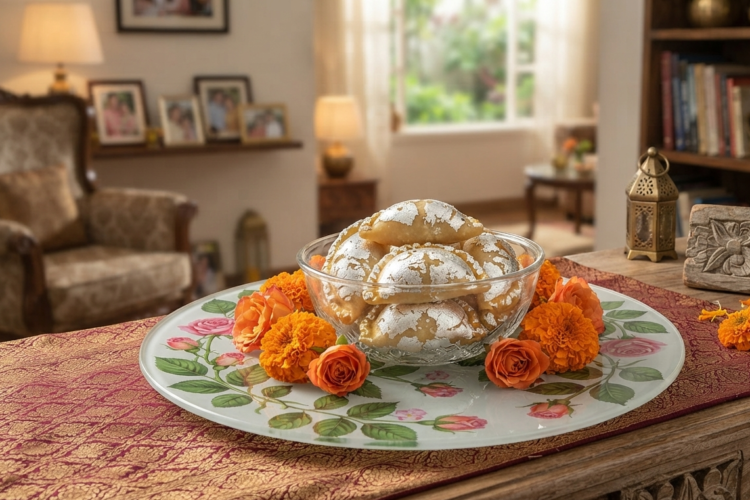
The festival of colors is here, and what better way to celebrate Holi than with a homemade Gujiya Recipe? Gujiya is a popular Indian sweet traditionally prepared during Holi and other festive occasions.
These golden, crispy pastries are filled with a rich mixture of mawa (khoya), roasted semolina, nuts, coconut, raisins, and cardamom. The flaky outer crust and sweet, nutty filling make every bite delicious.
In my home, homemade gujiya is one of those sweets that bring back beautiful memories of Holi celebrations. The aroma of freshly fried gujiya fills the kitchen, and sharing them with family and friends makes the festival even more special.
What Is Gujiya?
Gujiya is a traditional Indian sweet with a crispy pastry shell and a sweet filling. It is especially popular during Holi in North India.
The shape is somewhat similar to a samosa, but gujiya has a sweet filling and a distinctive half-moon shape. Traditionally, the filling is made with khoya, nuts, coconut, sugar, and aromatic spices.
This Gujiya Recipe uses a delicious combination of mawa, roasted suji, dry fruits, coconut, raisins, and cardamom.
Ingredients for Gujiya
For the Gujiya Dough
- 2 cups plain flour (maida)
- ¼ cup ghee
- Lukewarm water, as needed
Gujiya Filling
- ½ cup mawa (khoya)
- ⅓ cup semolina (suji), roasted
- ¾ cup powdered sugar
- 8–10 almonds, finely chopped
- 8–10 cashews, finely chopped
- 6–7 pistachios, finely chopped
- ⅓ cup grated coconut
- 15–20 raisins
- 1 teaspoon cardamom powder
Frying
- Oil or ghee, as needed
Decoration
- 1–2 sheets edible silver leaf (varak), optional
How to Make Gujiya Recipe
Step 1: Prepare the Gujiya Dough
First, add the flour to a large mixing bowl.
Next, add ¼ cup melted ghee and mix it thoroughly with your fingertips. The flour should resemble coarse crumbs when the ghee is properly incorporated.
Gradually add lukewarm water and knead to make a firm but smooth dough. Avoid adding too much water because a soft dough can make the gujiya difficult to shape.
Cover the dough with a damp cloth and let it rest for 15–20 minutes.
2: Prepare the Gujiya Filling
Meanwhile, roast the chopped almonds, cashews, and pistachios lightly if they are not already roasted.
Next, place the mawa in a pan and cook it over low heat until it becomes slightly fragrant and loses excess moisture. Allow it to cool.
In a bowl, combine the cooled mawa, roasted semolina, powdered sugar, chopped nuts, grated coconut, raisins, and cardamom powder.
Mix everything well.
Your sweet and aromatic gujiya filling is ready.
3: Divide the Dough
Once the dough has rested, knead it briefly.
Divide it into approximately 15–20 equal portions and roll each portion into a small ball.
Keep the dough balls covered with a damp cloth while you work. This prevents them from drying out.
Step 4: Roll the Gujiya
Take one dough ball and roll it into a thin circle about 3 inches in diameter.
Try to keep the edges slightly thinner than the center. You do not need flour for rolling if the dough has the right consistency.
Place a portion of the prepared filling in the center.
Do not overfill the gujiya because too much filling can prevent the edges from sealing properly.
5: Shape and Seal the Gujiya
Fold the dough over the filling to create a half-moon shape.
Press the edges firmly together to seal them.
You can then twist the edges inward to create the traditional pleated design. Alternatively, use a gujiya mould for a quick and even shape.
Place the prepared gujiya on a plate and cover it with a damp cloth while making the remaining pieces.
6: Fry the Gujiya
Heat oil or ghee in a deep, heavy-bottomed kadai over medium heat.
Before frying, make sure the oil is hot enough. However, avoid using very high heat because the outer crust may brown too quickly while the inside remains undercooked.
Carefully place a few gujiyas into the hot oil.
Fry them over medium heat until they become golden brown and crisp on all sides.
Turn them gently while frying so they cook evenly.
Once done, remove the gujiyas with a slotted spoon and place them on absorbent paper to remove excess oil.
Repeat with the remaining gujiyas.
How to Store Homemade Gujiya
Allow the gujiyas to cool completely before storing them.
Then, place them in a clean, airtight container.
When stored properly, these homemade gujiyas can stay fresh for approximately 10–15 days, depending on the moisture in the filling and storage conditions.
Always make sure the filling is properly cooked and cooled before storing.
Tips for Perfect Gujiya
Make a Firm Dough
The dough should be firm rather than soft. This helps the gujiya hold its shape while frying.
Don’t Overfill
Use a moderate amount of filling in each gujiya. Therefore, you can seal the edges properly without the filling spilling out.
Seal the Edges Well
Press the edges firmly before making the pleats. If you are using a gujiya mould, make sure the edges are completely sealed.
Fry on Medium Heat
Medium heat is important for crispy and evenly cooked gujiya. If the oil is too hot, the outside can brown before the pastry becomes crisp.
Cool Before Storing
Finally, let the gujiya cool completely before placing them in an airtight container. Otherwise, trapped steam can make them lose their crispness.
Can I Bake Gujiya Instead of Frying?
Yes, you can bake gujiya for a lighter alternative.
Place the prepared gujiyas on a lined baking tray and lightly brush them with ghee. Bake in a preheated oven until they become golden and crisp.
However, traditionally, gujiya is deep-fried, which gives it its characteristic flaky and crispy texture.
When to Serve Gujiya
This Gujiya Recipe is especially popular during:
- Holi
- Diwali
- Family celebrations
- Indian festive gatherings
- Special occasions
- Homemade festive gift boxes
Serve gujiya with tea or simply enjoy it as a festive dessert with family and friends.
Final Thoughts
This traditional Gujiya Recipe is a delicious part of Holi celebrations. The crisp pastry, rich mawa filling, roasted nuts, coconut, raisins, and fragrant cardamom come together beautifully in every bite.
Most importantly, homemade gujiya is not just about the sweet itself. Making it together, sharing it with loved ones, and celebrating Holi with family are what make this traditional dessert so special.
So, prepare a batch of these golden homemade gujiyas, share them with your loved ones, and celebrate the festival of colors with sweetness and joy.
Once again, Happy Holi, everyone! 🌸🎨
Recipe Details
Preparation Time: 30 minutes
Resting Time: 15–20 minutes
Cooking Time: 30–40 minutes
Servings: 15–20 gujiyas
Cuisine: Indian
Course: Dessert / Mithai
Occasion: Holi, Festivals