
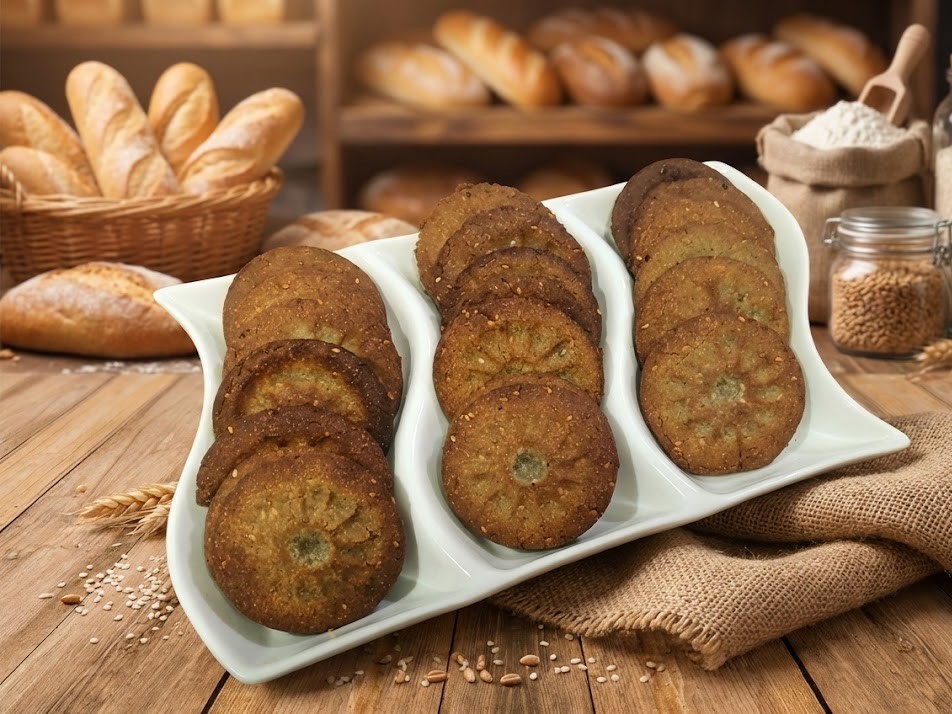
Some recipes are not just food—they are memories.
This Bajra Khasta takes me back to winter afternoons when the kitchen smelled of warm ghee, jaggery melting slowly, and sesame seeds crackling softly. In those moments, health and taste walked hand in hand.
Made with pearl millet flour, white sesame seeds, and natural jaggery, this khasta is crisp, earthy, and deeply satisfying. It’s the kind of snack you enjoy with a cup of tea, without guilt—just comfort.
Why Bajra Khasta is a Must-Try
- Rich in iron & fiber
- Naturally gluten-friendly
- Keeps the body warm in winter
- Perfect tea-time healthy snack
- No refined sugar
Ingredients
- Pearl millet (bajra) flour – 2 to 3 cups
- White sesame seeds – 1½ cups
- Cardamom powder – ½ tsp
- Jaggery (grated or powdered) – as needed (to taste)
- Ghee – for moyan + binding
- Ghee or oil – for shallow frying
How to Make Bajra Khasta
Step 1: Roast the Sesame Seeds
Dry-roast the white sesame seeds on a low flame until they turn aromatic and lightly golden. Let them cool.
Step 2: Prepare the Dough
In a large bowl, add:
- Bajra flour
- Roasted sesame seeds
- Cardamom powder
Add warm ghee gradually, rubbing it into the flour with your fingertips until the mixture feels crumbly (this ensures khastapan).
Now add grated jaggery. Mix well.
Use a little warm water only if required to bind into a firm dough.
Step 3: Shape the Khasta
Take small portions and flatten them slightly into thick discs. Do not make them too thin.
Step 4: Shallow Fry
Heat ghee or oil on a low to medium flame.
Shallow-fry the khasta slowly, turning occasionally, until crispy &golden brown.
Low heat is the secret—this allows bajra to cook properly and stay crisp.
Serving Suggestions
- Enjoy with ginger tea or masala chai
- Store in an airtight container for 5–7 days
- Perfect for winter mornings or evening hunger
Pro Tips
- Always fry on a low flame for perfect texture
- If jaggery releases moisture, add a little more flour
- You can add saunf or dry ginger powder for extra warmth
Health Note
Bajra is excellent for digestion and joint health—especially beneficial in winter. Combined with sesame and jaggery, this khasta becomes a nutrient-dense traditional snack.