
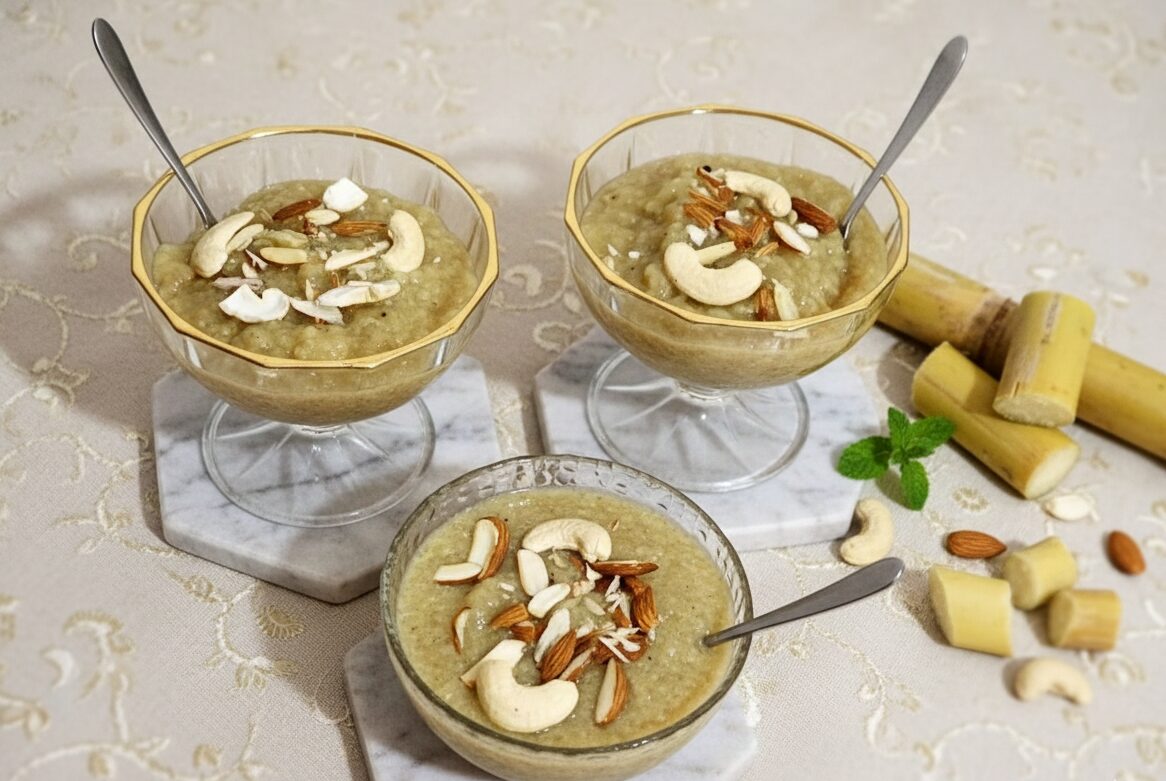
Lucknavi Rasawal is a rare winter dessert from Awadh. It is made using fresh sugarcane juice and rice. Unlike regular kheer, this sweet contains no refined sugar.
Instead, its sweetness comes naturally from fresh ganna juice. As a result, the flavor is mild, earthy, and slightly caramel-like.
Traditionally, Rasawal was prepared in royal kitchens of Lucknow. Even today, many families make it during the winter season when sugarcane is freshly harvested.
If you love traditional Indian sweets, this authentic Awadhi dessert is worth trying
🌾 What is Rasawal?
Rasawal is a slow-cooked rice pudding made with fresh sugarcane juice. It is often called sugarcane kheer. However, it is lighter and less sweet than regular kheer.
Unlike milk-based desserts, Rasawal relies mainly on sugarcane juice for both texture and flavor. Because of this, it tastes unique and natural.
In Awadhi households, it is considered a satvik dish. It is simple, seasonal, and deeply comforting.
📝 Ingredients
- 1 litre fresh sugarcane juice (strained, same day)
- ¼ cup rice (soaked 2–3 hours and coarsely ground)
- 2 tbsp pure ghee
- ½ tsp green cardamom powder
- 2 tbsp sliced almonds and pistachios
- ½ tsp kewra water or rose water (optional)
Always use fresh sugarcane juice. Old juice may split while cooking.
👩🍳 How to Make Lucknavi Rasawal
Step 1: Roast the Rice
First, heat ghee in a heavy-bottom pan on low flame.
Then add the ground rice and roast gently. Stir continuously. Do not let it brown.
Step 2: Add Sugarcane Juice
Next, slowly pour in the strained sugarcane juice. Keep stirring while adding it. This prevents lumps from forming.
Step 3: Slow Cook
Now cook the mixture on very low heat. Stir frequently to avoid curdling.
After 30 to 40 minutes, the mixture will begin to thicken. Because sugarcane juice is delicate, never cook on high flame.
Step 4: Add Flavoring
Finally, add cardamom powder and sliced dry fruits. You may also add a few drops of kewra or rose water for aroma.
Switch off the heat once it reaches a soft pudding consistency.
Serve warm or at room temperature.
🍽 Taste and Texture
Rasawal is mildly sweet. It has soft rice grains and a creamy texture.
Moreover, the sugarcane juice gives it a light caramel flavor. Unlike heavy desserts, it feels soothing and balanced.
❄️ Why Rasawal is Made in Winter
Rasawal is traditionally prepared during winter. Fresh sugarcane juice is easily available during this season.
In addition, warm desserts are easier to digest in cooler weather. Therefore, Rasawal became a seasonal favorite in Awadhi homes.
🌿 Traditional and Ayurvedic Benefits
According to traditional food wisdom:
- It helps build natural vitality.
- It may support joint comfort during winter.
- It is naturally rich in minerals from sugarcane.
- When eaten warm, it supports digestion.
However, like all sweets, it should be enjoyed in moderation.
Best time to eat: Morning or early afternoon.
⚠️ Common Mistakes to Avoid
Many people make small mistakes while preparing Rasawal. Here are a few things to remember:
- Do not cook on high flame.
- Do not use old sugarcane juice.
- Stir continuously to prevent splitting.
- Avoid refrigerating immediately.
Because it contains fresh juice, it can ferment quickly.
🧊 Storage Tips
Rasawal tastes best when fresh.
If needed, keep it at room temperature for a few hours. However, avoid storing it overnight. Reheating on high flame may change the texture.
🧿 Cultural Significance
In Awadhi culture, Rasawal is more than just a dessert. Traditionally, it was prepared on auspicious days and sometimes offered as prasad.
It represents seasonal harvest, simplicity, and gratitude.
Even today, this sugarcane pudding connects food with tradition.
❓ Frequently Asked Questions
1. Is Rasawal the same as kheer?
No. Rasawal is made with sugarcane juice instead of milk and sugar.
2. Can I add milk to Rasawal?
Some households add a little milk, but authentic Lucknavi Rasawal uses only sugarcane juice.
3. Why does sugarcane juice curdle while cooking?
It usually happens due to high flame or old juice. Always cook on very low heat.
4. Can Rasawal be made without ghee?
Yes, but ghee enhances aroma and texture.
5. Is Rasawal healthy?
It contains natural sugars and minerals from sugarcane, making it lighter than refined-sugar desserts when eaten in moderation.
📌 Final Thoughts
Lucknavi Rasawal is not just a dessert — it is a celebration of season, simplicity, and heritage.
If you love traditional Indian sweets or want to explore forgotten Awadhi recipes, this winter pudding is a must-try.
A dessert that connects food, season, and soul.